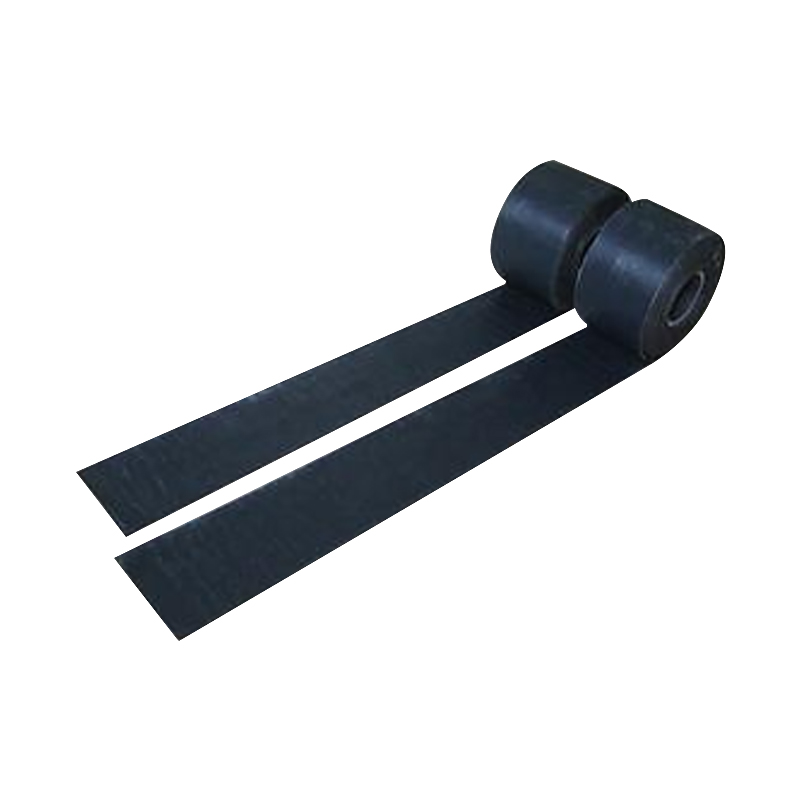

un geomembrana compuesta es un revestimiento geosintético de alto rendimiento creado uniendo una o dos capas de tejido geotextil con una o más capas de geomembrana, generalmente hecha de polietileno de alta densidad (HDPE) o polietileno lineal de baja densidad (LLDPE). Esta estructura híbrida combina las propiedades de barrera impermeable de la geomembrana con las capacidades de refuerzo y protección mecánica del geotextil.
El propósito fundamental de una geomembrana compuesta es proporcionar rendimiento anti-filtración superior al mismo tiempo que ofrece mayor resistencia a la perforación, resistencia a la tracción y estabilidad de pendientes en comparación con las geomembranas independientes. La capa de geotextil actúa como un cojín protector que evita daños a la geomembrana durante la instalación y la vida útil, mientras que la capa de geomembrana sirve como barrera primaria de fluidos con tasas de permeabilidad inferiores. 10⁻¹⁷cm/s [^3^].
Materiales y composición
Componentes de la capa de geomembrana
El componente de geomembrana se fabrica a partir de láminas poliméricas continuas con las siguientes formulaciones típicas:
- HDPE (Polietileno de Alta Densidad): Contiene entre 95% y 98% de resina de polietileno con entre 2% y 3% de negro de humo, antioxidantes y estabilizadores UV. HDPE ofrece alta resistencia química y resistencia a la tracción alrededor 27MPa [^6^].
- LLDPE (Polietileno lineal de baja densidad): Formulado con 94–96% de resina, brinda flexibilidad y alargamiento superiores hasta 500–800% [^6^].
- PVC (Cloruro de polivinilo): Contiene entre un 30% y un 40% de polímero con plastificantes, lo que ofrece una excelente flexibilidad para geometrías complejas [^15^].
Componentes de la capa geotextil
La capa de refuerzo geotextil normalmente consta de:
- Poliéster o polipropileno no tejido: Fibras perforadas que proporcionan filtración y protección.
- Polipropileno tejido: Mayor resistencia a la tracción para aplicaciones exigentes
- Rango de peso unitario: 100–1000 g/m² dependiendo de los requisitos de la aplicación [^3^]
| Tipo de configuración | Estructura | Peso Total | Aplicación primaria |
|---|---|---|---|
| Un Geotextil Una Geomembrana | GTX/GM | 200–800 g/m² | Embalses, terreno llano |
| Dos Geotextiles Una Geomembrana | GTX/GM/GTX | 800-1500 g/m² | Pendientes de vertedero (gradiente 1:2) |
| Un Geotextil Dos Geomembranas | GTX/GM/GM | 1.000–2.000 g/m² | Contención de residuos peligrosos |
Tipos de geomembranas compuestas
Por tipo de polímero
Las geomembranas compuestas se clasifican en función del polímero utilizado en la capa impermeable:
- Geomembranas compuestas de HDPE: Rígido, químicamente resistente, con densidad ≥0,940 g/cc. Rango de espesor: 1,0–2,5 mm. La vida útil supera 50 años cuyo está cubierto [^15^].
- Geomembranas compuestas de LLDPE: Flexible con densidad ≤0,939 g/cc. Mejor conformidad con superficies irregulares. Rango de espesor: 0,75–1,5 mm [^19^].
- Geomembranas compuestas de PP (Polipropileno): Producto bastante nuevo con buena estabilidad dimensional y flexibilidad [^15^].
- Geomembranas compuestas de PVC: Excelente flexibilidad a todas las temperaturas, pero requiere protección UV para aplicaciones expuestas [^15^].
Por textura superficial
Las características de la superficie determinan la fricción y la estabilidad de la pendiente:
- Superficie lisa: Coeficiente de fricción 0,3–0,4, adecuado para instalaciones planas
- Superficie texturizada: Coeficiente de fricción 0,6–0,8, esencial para pendientes de hasta gradiente 1:2 [^3^]
Características y funciones clave
Funciones primarias
Las geomembranas compuestas cumplen múltiples funciones críticas en los sistemas de contención:
- Impermeabilidad: Bloquea la migración de fluidos con permeabilidad. 100 veces menor que los revestimientos de arcilla compactada (10⁻⁷ cm/s) [^3^].
- Protección Mecánica: La capa de geotextil aumenta la resistencia a la perforación al 25% (400 N frente a 300 N para geomembranas independientes) [^3^].
- Refuerzo: Resistencia a la tracción mejorada por 50% (20-80 kN/m), soportyo cargas de hasta 1500 kPa [^3^].
- Estabilidad de la pendiente: El coeficiente de fricción de 0,6 a 0,8 reduce el deslizamiento del suelo en 80% en comparación con geomembranas lisas [^3^].
Características de rendimiento
| Propiedad | Valor típico | Estándar de prueba |
|---|---|---|
| Permeabilidad | < 10⁻¹⁷cm/s | unSTM D5886 |
| Resistencia a la punción | 400–800 norte | unSTM D4833 |
| Resistencia a la tracción | 20–80 kN/m | unSTM D4595 |
| Resistencia química | pH 2-12 | unSTM D5747 |
| Resistencia a los rayos UV | 90 % de integridad después de 1500 horas | unSTM G154 |
La estructura compuesta proporciona redundancia y tolerancia a defectos , lo que lo hace significativamente más confiable que los sistemas de una sola capa [^20^].
Aplicaciones de ingeniería
Protección Ambiental y Vertederos
Las geomembranas compuestas son fundamentales para aislar residuos peligrosos en vertederos e instalaciones de tratamiento de aguas residuales:
- Revestimientos de vertederos: Los compuestos de HDPE de 1,5 a 2,0 mm con geotextiles de 600 g/m² evitan 99,9% de contaminación por lixiviados [^3^].
- Sistemas de recolección de lixiviados: Los revestimientos compuestos reducen la contaminación del agua subterránea al 98% [^3^].
- Cumplimiento normativo: Cumple con la Directiva de la UE 1999/31/EC y las normas de la EPA para la contención de desechos municipales y peligrosos.
Minería y Extracción de Recursos
La industria minera depende de geomembranas compuestas para las operaciones de contención de relaves y lixiviación en pilas:
- Estanques de relaves: Los compuestos de HDPE de 1,5 a 2,0 mm resisten cargas de 1000 kPa y evitan la filtración de cianuro [^3^].
- Plataformas de lixiviación en pilas: Los compuestos texturizados mejoran la recuperación del metal al 10% mientras que contiene el 99% de los efluentes [^4^].
- Ahorro de costos: La mina polaca KGHM redujo las filtraciones en 95% y ahorró $600 000 al año utilizando geomembranas compuestas de 2,0 mm [^3^].
Recursos Hídricos e Ingeniería Hidráulica
Las aplicaciones de contención de agua se benefician de la doble protección de los sistemas compuestos:
- Embalses y presas: El HDPE de 1,0 a 2,0 mm reduce la filtración en 95% en sistemas de alta presión [^4^].
- Canales y riego: Los compuestos LLDPE se adaptan al asentamiento mientras mantienen 90% reducción de filtraciones [^4^].
- unquaculture: El LLDPE de 0,75 a 1,5 mm garantiza 95% retención de agua en estanques de peces y camarones [^4^].
Otras aplicaciones críticas
- Contención secundaria: Las instalaciones de petróleo y gas utilizan LLDPE de 1,0 mm para reducir la migración de fluidos en 98% [^4^].
- Impermeabilización de túneles: Los compuestos de PVC brindan flexibilidad para geometrías subterráneas complejas.
- Digestores de biogás: Los compuestos resistentes a productos químicos previenen las fugas de metano.
Problemas y soluciones comunes de soldadura
Defectos críticos de soldadura
La integridad de la costura es el factor más crítico que determina el rendimiento del revestimiento a largo plazo. Los problemas comunes de soldadura incluyen:
- Fallo en la prueba de resistencia al despegue de la costura: La interfaz soldada se separa durante la prueba de pelado, lo que indica una unión insuficiente. Los requisitos especifican que la resistencia al pelado de las costuras debe alcanzar al menos 70% de resistencia de la hoja principal [^28^].
- Soldaduras en frío: Una temperatura insuficiente (por debajo de 220 °C) da como resultado una fusión incompleta y enlaces moleculares débiles [^23^].
- Debilidad de la zona afectada por el calor: El material parcialmente fundido adyacente a las costuras es 2,3 a 4 veces más susceptible al agrietamiento por tensión que la geomembrana original [^25^].
- Defectos de contaminación: El polvo, la humedad o los aceites en las superficies de soldadura comprometen la integridad de la costura [^23^].
- Arrugas y desalineación: La colocación desigual del material provoca uniones débiles y soldaduras incompletas [^23^].
Técnicas y parámetros de soldadura
| Método de soldadura | Rango de temperatura | Velocidad | unpplication |
|---|---|---|---|
| Soldadura de cuña caliente | 300–450°C | 1,5–4,0 m/min | Costuras largas y rectas |
| Soldadura por extrusión | 220–340°C | control manual | Reparaciones, esquinas, penetraciones. |
| Soldadura por aire caliente | Hasta 600°C | variable | Materiales de PVC, trabajos de detalle. |
Requisitos de prueba y control de calidad
Un control de calidad adecuado evita fallos en la soldadura:
- Pruebas destructivas: Cinco especímenes probados para determinar la resistencia al corte y al pelado de las costuras cada 150–300 metros de costura soldada [^21^].
- Requisito de resistencia al corte: Debe alcanzar el mínimo 90% de resistencia del material original [^26^].
- Enlace de película desgarrada (FTB): El material base debe fallar antes de que la soldadura se separe; una prueba de pelado aprobada requiere <25 % de separación de la costura [^21^].
- Pruebas no destructivas: unir channel pressure tests at 200–300 kPa detect leaks without damaging seams [^28^].
Mejores prácticas para la prevención de defectos
La implementación de estos procedimientos minimiza los problemas de soldadura:
- Realice soldaduras de prueba al inicio de cada jornada laboral y cada 2 horas durante la soldadura de costura transversal [^18^].
- Limpie las superficies de soldadura con amoladoras de disco dentro 30 minutos de soldadura; no retire más de 4 mils de material [^18^].
- Mantener la calibración del equipo; no suelde hasta que las soldaduras de prueba superen los requisitos de resistencia [^18^].
- Proteja contra la acumulación de humedad entre los paneles durante la instalación [^18^].
- Bordes superiores biselados en 45° mínimo antes de la soldadura por extrusión [^18^].
Preguntas frecuentes sobre geomembranas compuestas
¿Cuál es la vida útil típica de una geomembrana compuesta?
Las geomembranas compuestas cubiertas tienen una vida útil prevista que excede 50 años , y algunos informes citan una esperanza de vida de más de 950 años cuando se entierran adecuadamente y se protegen de la exposición a los rayos UV [^15^]. Las geomembranas expuestas suelen durar unos 30 años.
¿En qué se diferencia una geomembrana compuesta de una geomembrana estándar?
un composite geomembrane integrates a geotextile layer with the geomembrane, providing mechanical protection, increased puncture resistance, and better interface friction. This combination offers 25% más de resistencia a la perforación and 50% más de resistencia a la tracción que las geomembranas independientes [^3^].
¿Qué espesor debo especificar para mi proyecto?
La selección del espesor depende de la aplicación: 0,75–1,0 mm para acuicultura y paisajismo; 1,0–1,5 mm para plantas de tratamiento de agua y depuradoras; 1,5–2,0 mm para vertederos y minería; 2,0–3,0 mm para la contención de residuos peligrosos [^3^].
¿Se pueden reparar las geomembranas compuestas si están dañadas?
Sí. Las áreas defectuosas se pueden reparar mediante soldadura por extrusión o técnicas de parcheo. Todas las reparaciones deben someterse a pruebas no destructivas antes de cubrir el revestimiento [^18^]. Las intersecciones de costuras requieren parches soldados por extrusión como refuerzo.
¿Qué estándares rigen la calidad de las geomembranas compuestas?
Los estándares clave incluyen unSTM D6392 (prueba de integridad de la costura), GRI GM13 (especificaciones de HDPE), unSTM D4833 (resistencia a la punción), y unSTM D4595 (propiedades de tracción). La resistencia de la costura debe alcanzar el mínimo 70% cáscara and 90% de corte de valores del material original [^21^].
¿Cuánto ahorro de costos proporcionan las geomembranas compuestas?
Las geomembranas compuestas reducen los costos de instalación al 30% en comparación con los revestimientos de concreto ($0,50–$3/m² frente a $5–$10/m²) y reducir los costos de mantenimiento en 20% . Sus anchos de 4 a 8 metros minimizan las costuras, ahorrando un adicional 15% en costos laborales [^3^].